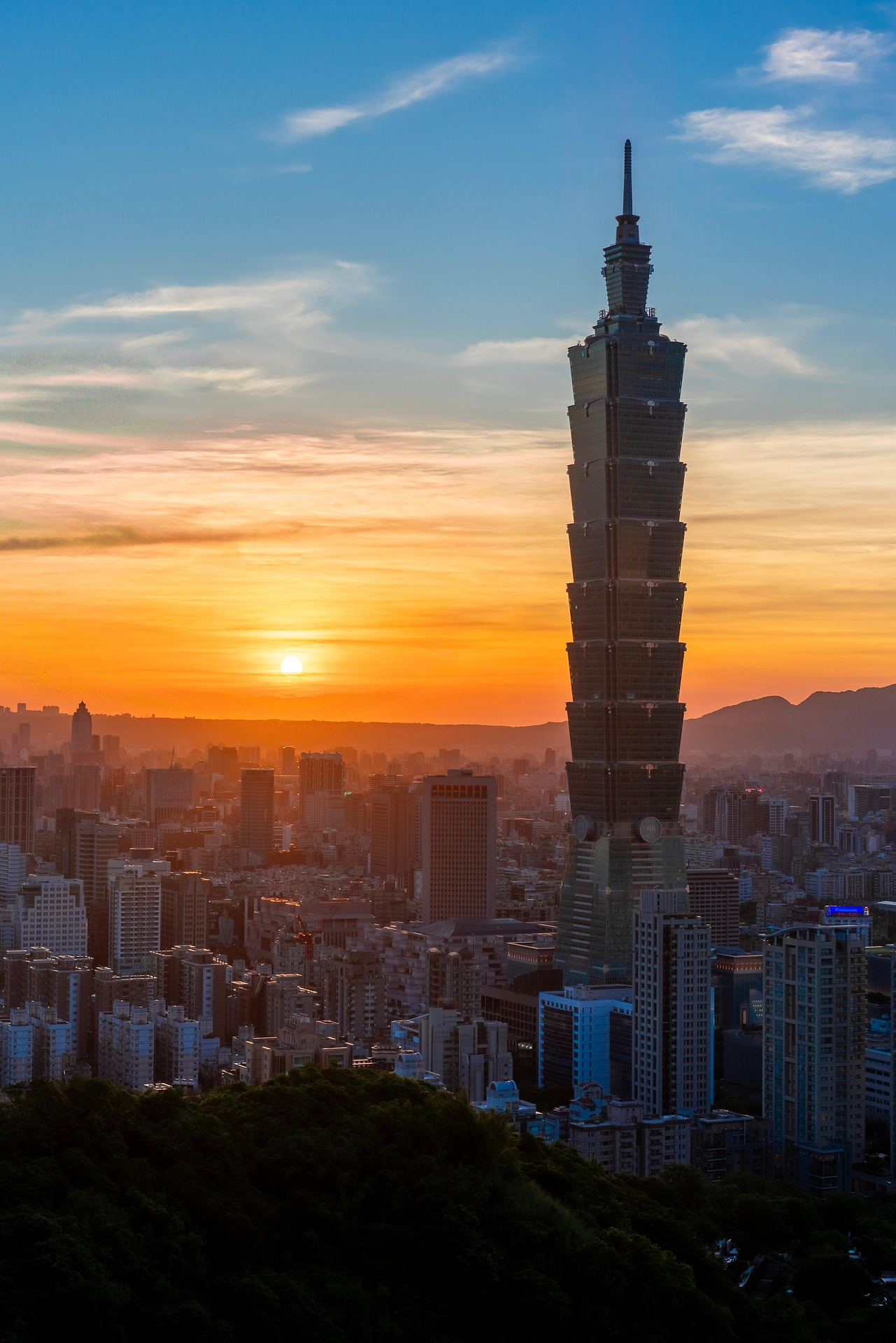

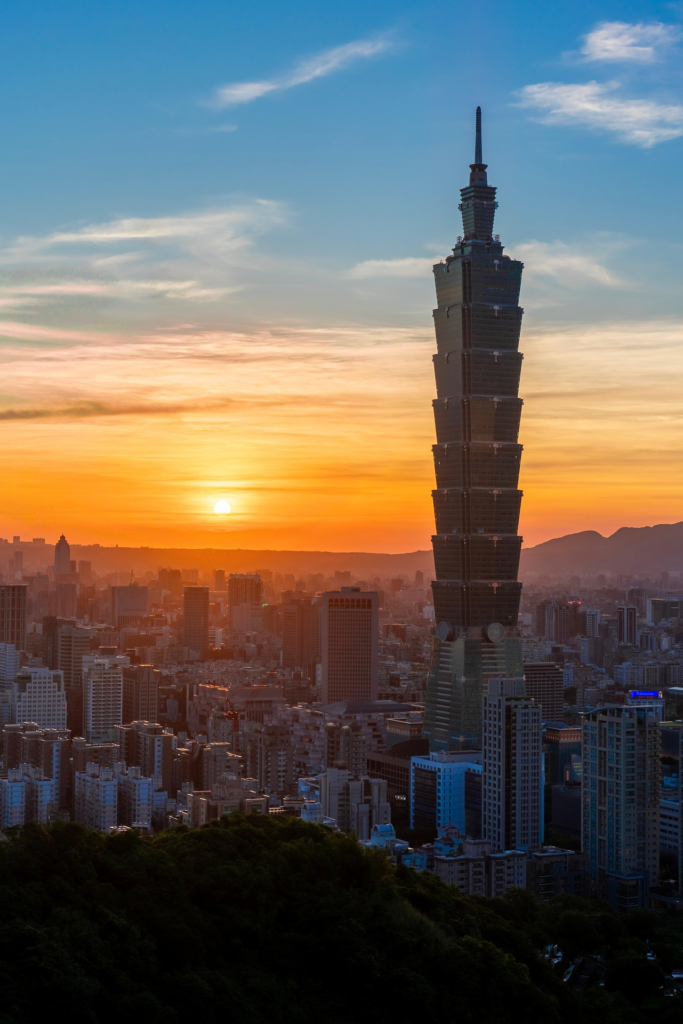
Taipei 101 is a landmark skyscraper located in Xinyi District, Taipei, Taiwan. Completed in 2004 and designed by architect C.Y. Lee, it was the world’s tallest building from 2004 until 2010. The tower reaches a structural height of 508 meters (1,667 feet) and has 101 above-ground floors plus several basement levels.
Key features:
- Architecture and symbolism: The building’s tiered pagoda-like form references traditional Asian architecture and the number eight—considered lucky in Chinese culture—appears repeatedly in its design. Its façade uses green-tinted glass and aluminum to withstand wind and seismic forces.
- Engineering: Taipei 101 was engineered to resist typhoon winds and earthquakes. A prominent feature is the 660-ton tuned mass damper, a large suspended sphere visible from the observatory that reduces building sway and enhances stability.
- Uses: Taipei 101 houses premium offices, conference facilities, and an expansive multi-level shopping mall at its base with international boutiques and restaurants. The tower also offers indoor and outdoor observatories that provide panoramic views of Taipei and the surrounding area.
- Sustainability: In 2011 Taipei 101 earned LEED Platinum certification for existing buildings—the highest level of the U.S. Green Building Council’s rating system—after energy-saving retrofits.
- Cultural significance: The tower is a major tourist attraction and hosts spectacular New Year’s Eve fireworks displays. It is also a symbol of Taiwan’s economic development and modern identity.
Access: Taipei 101 is easily reached by Taipei Metro (Taipei 101/World Trade Center Station) and is part of the city’s central business and shopping district.