Northern Taiwan · Wanhua District, Taipei City
Longshan Temple | Historic Taipei, Faith & Divination Culture
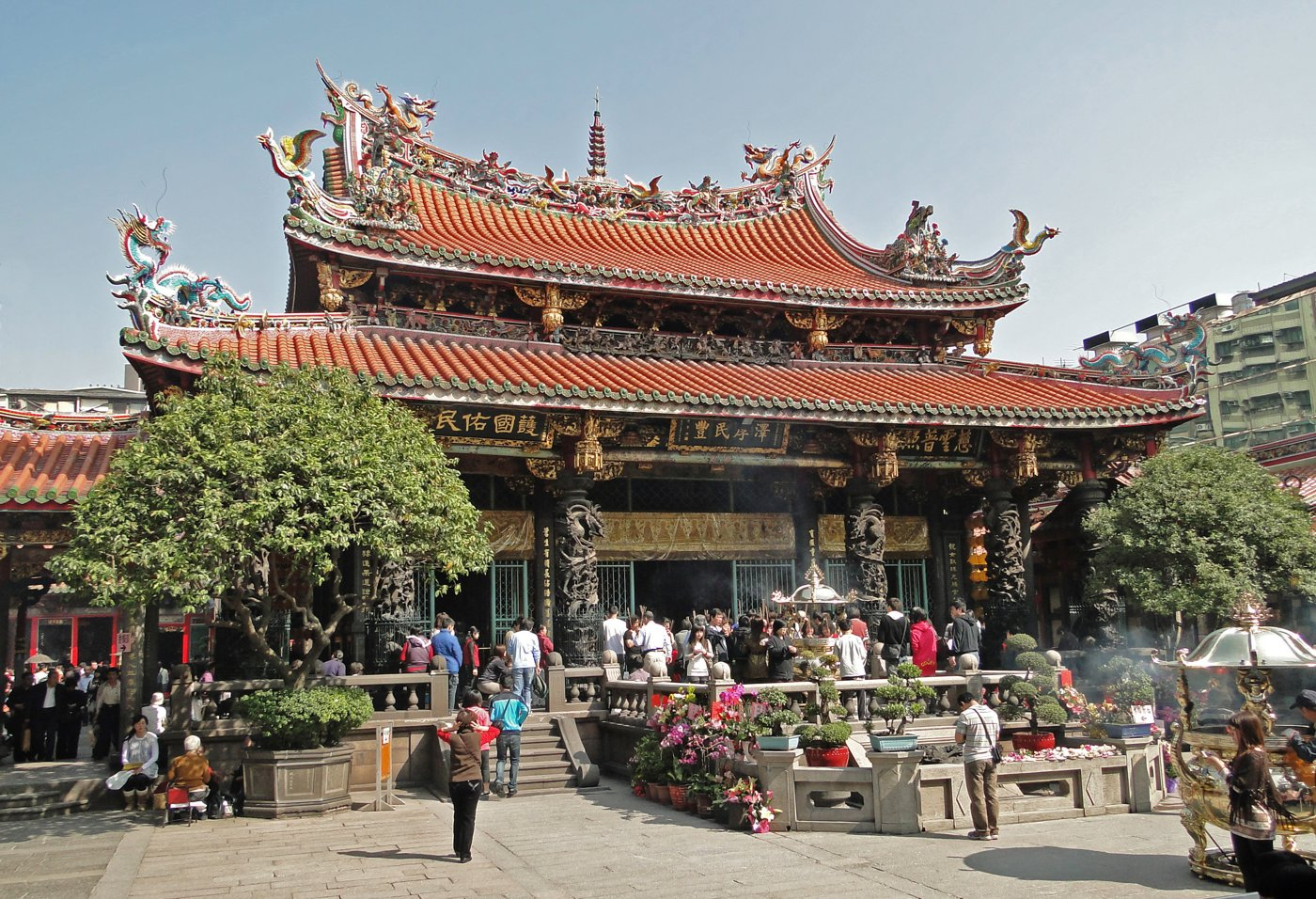
History & Culture · National Historic Monument · Temple Traditions
In a temple of old Taipei, discover the hopes and blessings people bring to everyday life.
A national historic monument approaching three centuries
Bangka Longshan Temple in Taipei’s Wanhua District was founded in 1738, the third year of the Qing emperor Qianlong’s reign. It is a representative Taipei attraction featured by Taiwan’s Tourism Administration. Its designation as a national historic monument in 2018 recognises its historical, artistic and religious value. Taiwan’s current monument categories are national, special-municipality, and county or city monuments, according to the responsible authority. The temple has undergone rebuilding, including major work from 1919 to 1924 and repairs after the Second World War. Its importance lies in the continuing life of its culture and faith.
First a temple, then a market: faith meets community life
The saying “first a temple, then a market” expresses a temple’s power to gather a community. Worshippers arrive, vendors and shops follow, and a lively neighbourhood develops. Bangka’s growth was also closely tied to river-port trade. Longshan Temple is therefore more than a place for blessings: it is a window into the everyday life of old Taipei.
Every prayer has its own story
The temple’s principal deity is Guanyin, the Bodhisattva of Compassion. Mazu, Wenchang Dijun, Guan Sheng Dijun and Yue Lao are also worshipped. In folk belief, hopes for safety, seafaring, learning, integrity and relationships each find a focus. The connections between different deities and everyday wishes reveal the diversity and inclusiveness of Taiwanese faith.
Understanding divination blocks
Many overseas visitors are curious about throwing divination blocks, called “bua bue” in Taiwanese. Worshippers use two crescent-shaped blocks to ask a deity for guidance, interpreting the combinations of curved and flat sides after they land. Observing the reverence and ritual is an introduction to Taiwanese temple culture. If you wish to participate, first learn the etiquette and follow the temple’s instructions.
Visitor reminders
Longshan Temple remains an active place of worship. Speak quietly and keep worshippers’ routes clear. Ask permission before photographing people and respect on-site photography and worship rules. Opening hours, events and restrictions are subject to the temple’s announcements.
Read the original Chinese article →
Official sources and further reading
Official reference · Official reference · Official reference · Official reference